The Sacred Calendar of Ehlonna
The worship of Ehlonna, Goddess of the Forests, Woodlands, Flora, Fauna and Fertility, follows the natural turning of the year rather than a rigid ecclesiastical calendar. Her festivals mark the changing seasons and celebrate the eternal cycle of birth, growth, fertility, abundance, decline, death and renewal.
Individual temples and communities inevitably possess their own customs, particularly amongst humans, Elves, half-Elves, halflings and other woodland peoples, but six great observances are recognised by many of Ehlonna's followers. Druids, rangers and isolated rural communities often celebrate them rather differently from established temples, yet their underlying meaning remains much the same.
The First Green
Early Spring; Renewal, Birth and Planting
The appearance of the first leaves and flowers of spring marks the First Green, traditionally regarded as the beginning of Ehlonna's sacred year. It celebrates the awakening of the natural world and the return of life after winter. Seeds are blessed before planting, newborn children are presented to the Goddess, and young animals are garlanded with spring flowers. Farmers frequently bring seed grain, tools and sometimes even handfuls of soil to Ehlonna's shrines for blessing. Couples hoping for children may also seek the blessing of her priesthood. Births during the First Green are considered particularly fortunate, and the festival is strongly associated with Ehlonna as the protector of young and vulnerable life.
The Flowering Night
Late Spring; Fertility, Love and the Celebration of Life
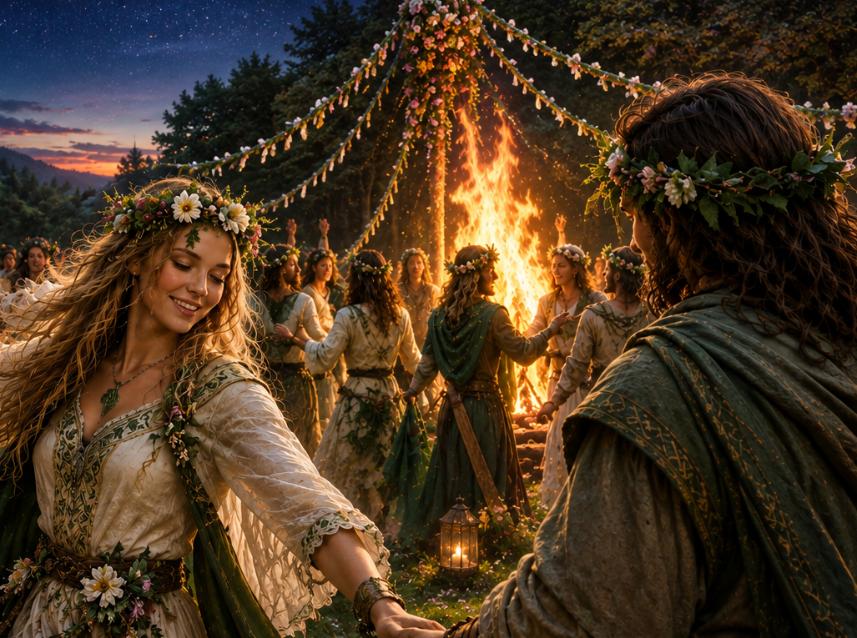
Commonly called simply the Flowering, this is amongst the most joyful and exuberant of Ehlonna's festivals. Fires are kindled at sunset, settlements are decorated with greenery and flowers, and celebrations continue throughout much of the night with feasting, drinking, music and dancing. Horses and livestock may be led between ceremonial fires to receive blessings of health and fertility, while couples traditionally leap smaller flames together for good fortune.
The Flowering celebrates fertility in all its forms: the flowering forest, growing crops, breeding animals and human love and sexuality. Amongst some Ehlonnan traditions, particularly rural and woodland sects, the night has consequently developed a distinctly amorous character. Existing lovers celebrate together, while unattached adults may also form temporary unions without any necessary expectation of marriage or continued attachment. Such practices vary considerably between communities and are by no means universal, but children conceived during the Flowering are traditionally regarded as particularly blessed by Ehlonna. As, the seasons turn, and the Green will come again.
The High Green
Midsummer; Strength, Freedom and the Wild
At the height of summer comes the High Green, when the natural world is believed to stand at the peak of its strength. The festival honours Ehlonna particularly as Lady of the Forests and Guardian of the Wild. Celebrations frequently include riding, archery, foot races, wrestling, swimming and tests of hunting and woodland skill. Rangers are particularly associated with the festival, and many renew their vows or commitments to defend the wilderness upon this day. Hunting is permitted in most traditions, but animals should be taken for food or genuine need rather than killed merely for amusement. Wanton destruction of wildlife during the High Green is considered a particularly serious insult to Ehlonna.
The Green Blessing
Late Summer ; Animals, Woodlands and Healing
The Green Blessing celebrates the creatures and wild places under Ehlonna's protection. Domestic animals are decorated with flowers and brought before her priests for blessing, while offerings of food are left for wild creatures. Healing also plays an important part in the observance. Many temples offer free treatment to injured animals during the festival, while rangers and druids seek out creatures suffering from traps, disease or deliberate cruelty.
Unicorns, perhaps the creatures most sacred to Ehlonna, occupy a special place in the Green Blessing. Where unicorns inhabit nearby forests, their voluntary appearance during the ceremonies is considered an extraordinary sign of divine favour. They are never expected to attend and certainly never compelled to do so.
Harvest Home
Autumn; Harvest, Community and Thanksgiving
Harvest Home gives thanks to Ehlonna for the bounty of the living world. The first portion of the harvest is traditionally offered to the Goddess before the remainder is shared amongst the community. Great communal meals are common, accompanied by singing, dancing and storytelling. Those who have enjoyed a prosperous year are expected to share their good fortune, and temples frequently distribute food to the poor during the festival.
Hospitality is considered sacred during Harvest Home. No willing guest should be turned away from a full table, and travellers, strangers, widows, orphans and those without families of their own are traditionally invited to share another household's meal. For Ehlonna's followers, generosity is itself an act of thanksgiving.
The Vigil of Embers
Midwinter; Memory, Death and Renewal
The Vigil of Embers is the most solemn of Ehlonna's major festivals and marks the darkest point of the year. Fires burn throughout the longest night while worshippers remember those who have died during the preceding year. Names are spoken aloud, stories of the dead are retold and places may be left beside the fire for absent family and friends. Yet the Vigil is not principally concerned with mourning. Death is understood as part of the natural cycle rather than its conclusion.
As dawn approaches, ceremonial fires are allowed to fade until only a single ember remains. Worshippers wait through the final darkness before using that ember to kindle a new flame at sunrise. Hearths, lamps and candles are then relit from the renewed fire. Customs differ considerably between Ehlonna's many traditions, but the meaning of the ceremony is universal:
Winter may come. The leaves may fall. All living things must eventually die. Yet life endure