The Divine Empire
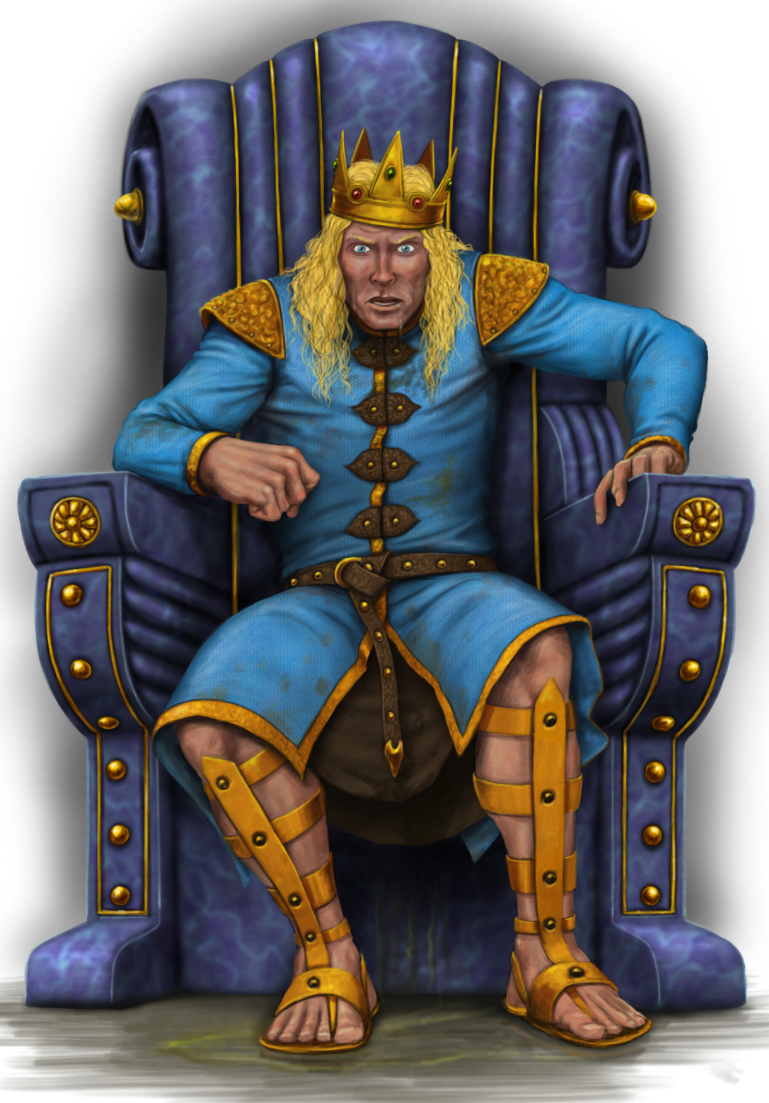
The Divine Empire
For more than three centuries, the Divine Empire has stood as the greatest civilisation in Warlderia. Vast in territory, rich in resources, and heir to the legacies of both Kaegor the Great and the Higher Races, it remains a realm of magnificent cities, prosperous provinces, ancient noble houses, and enduring faith. Its roads bind together peoples of many races, its laws are respected far beyond its borders, and its influence reaches every corner of the known world.
Where Kaegor forged the Empire through conquest and unity, Emperor Innocence transformed it through justice, mercy, and faith. Following the fall of the Mad Emperor, Innocence sought not merely to restore the Empire but to redeem it. Roads were rebuilt, ruined cities restored, learning encouraged, and peace returned to lands devastated by civil war. Perhaps his greatest achievement was the Imperial Concordat of Faiths, a settlement that recognised the lawful churches of the Empire and ended centuries of religious rivalry. By placing the recognised faiths beneath Imperial protection, Innocence transformed religion from a source of division into one of the principal pillars of Imperial stability. Many still regard his early reign as the Empire's true Golden Age. Those ideals remain the foundation upon which the Empire rests. Whether they continue to guide those who govern it is another matter.
At the heart of this immense realm still sits Divine Emperor Innocence, whose life has been unnaturally prolonged by the faintly angelic blood said to flow through his veins. Once a ruler of extraordinary energy and virtue, he has become an increasingly distant and almost mythical figure. He appears in public only on the holiest feast days or during ceremonies of profound importance. The daily governance of the Empire has gradually passed into the hands of ministers, provincial governors, senior nobles, and trusted retainers, each acting in his name but increasingly according to their own judgement.
Within the Imperial Palace, access to the Emperor is controlled almost exclusively by his devoted court of virgin handmaidens, whose loyalty has never been publicly questioned. Through them Imperial decrees are issued, audiences arranged, and the Emperor's wishes conveyed to the outside world. Whether those commands truly reflect Innocence's own intentions has become one of the Empire's most carefully guarded, and most quietly whispered, questions. Rumours of the Emperor's failing health spread from court to countryside despite the severe penalties for repeating them openly. Some claim his mind has begun to wander with age. Others insist he remains perfectly lucid but too weary to govern directly. A darker few whisper that he has become little more than a sacred symbol whilst others exercise power in his name. No one can say with certainty. Very few are permitted to see him.
To most of the Empire's citizens, however, these intrigues are distant concerns. The Divine Empire is experienced not through the Imperial Court but through its broad highways, bustling market towns, orderly villages, magnificent temples, and the reassuring presence of Imperial law. Farmers judge the Empire by the harvest, merchants by the safety of its roads, craftsmen by the prosperity of its guilds, and pilgrims by the welcome offered at its temples. For ordinary people, life within the Empire remains safer, wealthier, and more orderly than almost anywhere else in Warlderia. Across the Empire, fealty is still sworn to Innocence, banners still bear his radiant sunburst, and the appearance of unity is carefully maintained. Beneath that surface, however, the provinces increasingly pursue their own ambitions. Noble houses compete for influence within the Imperial Court, governors place regional interests before Imperial ones, and alliances are quietly forged beyond the Emperor's sight. Some dream of reforming the Empire. Others hope to dominate it. A few prepare for the day when it may finally cease to exist. Yet for all these divisions, the Empire endures.
Its great cities remain unrivalled centres of learning, commerce, and culture. The libraries of Wyrmford preserve knowledge gathered over a thousand years. The workshops of Iron March produce the finest steel on the continent. Merchants from distant kingdoms crowd the markets of Divine Kaegoria, whilst pilgrims journey to its magnificent temples from every province. Ancient noble houses continue to patronise artists, scholars, hospitals, monasteries, and knightly orders, preserving a civilisation whose achievements still surpass those of any neighbouring realm. Visitors often describe the Divine Empire as magnificent without being extravagant. White-stone cities crowned with soaring temples, fertile farmlands stretching beyond the horizon, ancient villas nestled amongst vineyards and olive groves, prosperous market towns, and carefully maintained highways all speak of centuries of peace and stability. It is a civilisation that values learning as highly as warfare, law as highly as wealth, and beauty as highly as power.
This is not a dying kingdom. It is a weary giant. Its armies remain formidable, its bureaucracy continues to function, and its roads still carry merchants, soldiers, pilgrims, and scholars from one end of the continent to the other. Should the Empire face a common enemy, it retains the ability to summon immense strength with remarkable speed. Even diminished, it remains the single greatest military, economic, and cultural power in Warlderia. What it lacks is not strength. It lacks certainty.
Many who govern still speak of honour, justice, and service, yet ambition increasingly overshadows principle. Some noble houses remain steadfastly devoted to the ideals upon which the Empire was founded, whilst others pursue wealth, prestige, or influence with little regard for the common good. The machinery of government continues to turn, but fewer hands now guide it towards a common purpose. Thus the Divine Empire exists in a state of uneasy balance—magnificent yet fragile, prosperous yet divided, powerful yet uncertain. It endures through tradition, the Concordat, and the quiet loyalty of countless soldiers, priests, magistrates, craftsmen, and ordinary citizens who still believe in the dream first forged by Kaegor and ennobled by Innocence.
Whether the Divine Empire enters a second golden age or slowly fragments beneath the weight of its own history remains impossible to know. For now it endures much as it always has: proud, magnificent, and quietly determined to believe that tomorrow will resemble yesterday.
There is an old saying throughout the Empire: "The Empire was forged by Kaegor. Perfected by Innocence. Its future now rests in lesser hands."

Illustration by Santiago Iborra (Quellion) - please do not use without permission