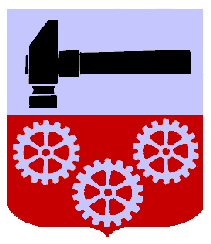
Iron March is a province of the mid-north of the Divine Empire, renowned as its foremost centre of mining, metallurgy, and industry. Its identity has long been shaped by the influence of the Hovarden Dwarven clan, whose arrival during the age of the Higher Races transformed the region from a rugged frontier into a land of forges, foundries, and deep-delved mines.
The Stalen Mountains, which dominate the northern reaches of Warlderia, are rich in iron ore of exceptional quality. These deposits have been exploited since the earliest days of Dwarven settlement, their yields smelted and refined into some of the finest steel known across the continent. The Hovarden Dwarves proved exacting yet fair masters, taking local human populations under their tutelage. In exchange for loyal service, they imparted knowledge of mining, smelting, and the craft of metalworking. Over generations, these human communities adopted many Dwarven traits—stoicism, discipline, and a relentless work ethic—though they were never regarded as equals by their teachers.
Less widely acknowledged, however, is the more complicated legacy of this long coexistence. Within Dwarven society, lineage is a matter of utmost pride, and the boundaries between Dwarf and outsider are rigidly enforced. Yet the realities of life in Iron March—close quarters, shared labour, and the imbalance between Dwarven men and women—gave rise, at times, to forbidden relationships. From these unions came a number of mixed offspring, who found themselves rejected by Dwarven society and regarded with suspicion by human communities. Over time, they formed a marginalised and often embittered subculture within the region.
When Kaegor’s revolt began, many among these outcasts seized upon it with fervour, seeing in rebellion an opportunity to overturn a system that had denied them belonging. In response, the Hovarden Dwarves withdrew their support from the human population entirely, expelling their former wards and severing ties that had endured for generations. What followed was a protracted and bitter conflict. Though the Dwarves retained control of their fortified holds, they struggled to counter the fluid tactics of their former subjects—ambush, sabotage, and sudden raids proved far more difficult to answer than open battle.
As unrest spread across Warlderia, the Hovarden ultimately chose withdrawal over attrition. They retreated westward beyond the Stalen Mountains, abandoning Iron March to its human inhabitants and driving all non-Dwarves from the territories they retained. The lands that would become Iron March were thus left in the hands of those once deemed unworthy.
In the years that followed, a new order emerged. Chief among its architects was the Kombel family, themselves of mixed Dwarven and human descent. Rising from the upheaval, they established their authority over the region and made their seat in the industrial city of Debdric. From among their number, they appoint the Iron Master, a ruler who swears fealty to the Divine Emperor but otherwise governs Iron March with considerable autonomy.
The Kombels have preserved and expanded upon the teachings of the Hovarden, studying ancient Dwarven texts and refining their own methods of metallurgy and engineering. Under their guidance, Iron March has grown into a powerhouse of production, its workshops and foundries supplying arms, tools, and machinery across the Empire.
The settlements of Iron March are dominated by industry. Smoke-stained towns cluster around forges and mines, where the air is thick with soot and the clang of hammer upon anvil is constant. Conditions in these places can be harsh, and pollution is an accepted burden, yet wages are comparatively high, drawing workers from far and wide. Temples and shrines are common, particularly those dedicated to Bleredd, patron of craftsmanship, and Pelor, whose followers tend to the injuries and illnesses of labourers.
Beyond the industrial centres lies a very different landscape. The countryside of Iron March is less tightly controlled, its villages and farms largely left to govern themselves so long as they provide food and raw materials to sustain the province. Here, life proceeds at a slower pace, and the traditions of the Old Faith remain strong, preserved among communities less touched by the demands of industry.
Despite its turbulent past, Iron March is a remarkably diverse province. Peoples of many races live and work side by side, drawn by opportunity or refuge. Half-Elves, Halflings, and Gnomes are common, while the region has become a haven for Half-Dwarves from across Warlderia, many seeking a place where their heritage is not a mark of shame. Even Dwarves themselves may be found within its borders, though their presence is often a quiet and cautious one.
The Iron Masters maintain a firm grip upon this diversity. While they permit a wide degree of personal freedom, they are swift and uncompromising in dealing with those who would sow discord among the populace. Agitators and troublemakers have been known to vanish without trace, a fact widely understood if seldom spoken aloud.
Iron March is thus a land of stark contrasts: grim industrial cities set against tranquil rural communities, ancient traditions alongside relentless innovation, and a people shaped by both hardship and opportunity. Under the steady, if unyielding, rule of the Iron Masters, it endures as one of the most vital—and most distinctive—provinces of the Divine Empir