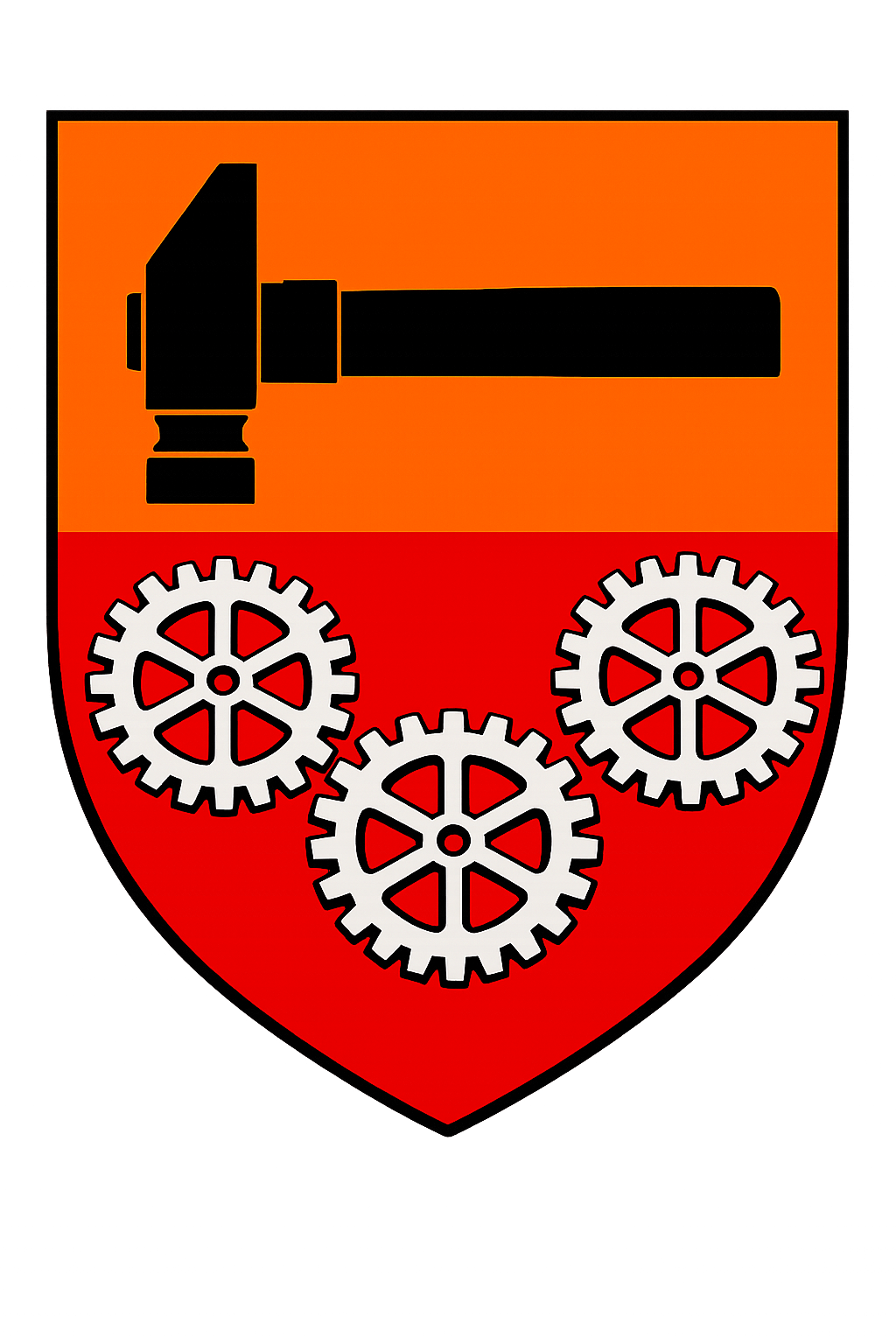
Half-Dwarves of Warlderia
 Half-Dwarves are most numerous within Iron March, where they form a substantial portion of the population and dominate many of the province's guilds, workshops, and ruling institutions. While physically closer to humans than dwarves in stature, they inherit much of the endurance, strength, and stubborn determination of their dwarven ancestors. For centuries they existed between two worlds. Most were rejected by traditional Dwarven society and viewed with suspicion by many human communities. As a result they developed a strong sense of self-reliance and mutual loyalty. Family, craft, and reputation are highly valued amongst Half-Dwarves, who often judge individuals by their work rather than their birth.
Many Half-Dwarves possess a deep fascination with engineering, metallurgy, architecture, and machinery. Whilst some attribute this to their Dwarven heritage, others argue that it stems from generations spent proving their worth through skill and achievement. Their workshops are often characterised by practical innovation rather than the conservative traditions favoured by the Hovarden Dwarves.
Though found throughout the Divine Empire, Iron March remains their cultural heartland. Here Half-Dwarves can rise to positions of wealth, influence, and authority impossible elsewhere. The ruling Kombel dynasty itself traces its ancestry to the earliest mixed families of the region and serves as a symbol of what their people have achieved since the withdrawal of the Hovarden.
Relations with the Dwarven holds remain complex. Some Half-Dwarves feel curiosity towards the culture that rejected their ancestors, whilst others harbour lingering resentment. Amongst the younger generations these old grievances are fading, but they have by no means been forgotten. The arrival of a Hovarden merchant caravan or embassy delegation can still provoke strong emotions in parts of Iron March.
Half-Dwarves are generally regarded as reliable, hardworking, and practical. Their critics, however, often describe them as stubborn, ambitious, and unwilling to accept limits imposed by tradition. Half-Dwarves themselves would usually consider all of these traits compliments.
Relations between humans and Dwarves have long been complex. There have been periods of cooperation, conflict, and eventual uneasy understanding. It is within these shared histories that Half-Dwarves have emerged.
- Rare unions, often unspoken or concealed
- Strong cultural stigma, particularly among Dwarves
- Little recognition of mixed lineage within Dwarven society
While such relationships are uncommon, they are not impossible. In isolated conditions, or in times of close contact, bonds may form despite cultural barriers.
However, the consequences are lasting, for both parent and child.
A People Without a Place
Half-Dwarves do not belong fully to either of their parent cultures.
- Rejected or ignored by Dwarven society
- Accepted, but often viewed with curiosity or pity by humans
- Lacking a unified identity or homeland
Some form small communities on the edges of Dwarven territories, while others integrate into human settlements. Many live lives shaped by their status as outsiders.
Personality
Life on the margins shapes the outlook of many Half-Dwarves.
- Often guarded and slow to trust
- May carry resentment toward both parent cultures
- Independent and self-reliant out of necessity
- Some develop a strong drive to prove their worth
While some become bitter or defensive, others channel their experiences into resilience and determination. No single temperament defines them, but their circumstances rarely leave them unchanged.
Physical Description
Half-Dwarves display a blend of human and Dwarven traits, with variation depending on lineage.
- Height typically between 4’6” and 5’6”
- Broad, heavy builds with strong frames
- Often possess larger hands, feet, and joints
- Skin tones vary, often ruddy or weathered
- Hair ranges from dark to red, often thick and coarse
- Faces tend toward round features with strong jaws
They are generally sturdier than humans, though less compact than full Dwarves.
Half-Dwarves mature more slowly than humans, reaching adulthood around thirty years, and may live up to two hundred years or more.
Lineage and Blood
Not all Half-Dwarves are of equal parentage.
- Many are several generations removed from a direct human–Dwarf union
- Dwarven traits may become less pronounced over time
- Pure Dwarves rarely form unions with Half-Dwarves due to cultural stigma
In some cases, Half-Dwarves form communities and families of their own, creating distinct lineages over time.
Relations with Other Peoples
Reactions to Half-Dwarves vary widely:
- Dwarves: Publicly reject them as a stain on lineage and honour; privately, some may offer limited support out of duty or guilt
- Humans: Often more tolerant, though attitudes range from acceptance to condescension
- Elves: Generally more understanding, viewing them as another expression of the world’s complexity
- Other races: Reactions differ, though many treat them with caution or indifference
They are rarely fully accepted, but neither are they entirely alone.
Settlements and Lands
Half-Dwarves have no true homeland, but some regions have larger populations.
- Small settlements near Dwarven territories
- Districts within human cities
- Isolated communities formed through necessity
One notable exception is the Iron March, a province within the Divine Empire:
- Significant Half-Dwarven population
- Known for mining and metalwork
- Blends Dwarven techniques with human organisation
- Ruled by the Kompel family, one of the few Half-Dwarven lineages to achieve wider recognition
Iron March is the closest thing Half-Dwarves have to a shared centre of identity.
Religion
Half-Dwarves rarely follow traditional Dwarven religion.
- Often adopt human faiths
- Some follow more universal or multi-racial deities
- Personal belief is often shaped by experience rather than tradition
Religion, for many, is a matter of individual choice rather than inherited identity.
Language
Half-Dwarves typically grow up multilingual:
- Common is universally spoken
- Many learn Dwarven, often through family connection
- Some adopt regional or trade languages
Their speech often reflects their mixed heritage, combining clarity with practicality.
Names
Half-Dwarves do not take Dwarven clan names.
- Often given human names
- May adopt descriptive or inherited surnames
- Some bear names reflecting their mixed heritage—sometimes respectfully, sometimes not
The Kompel family of Iron March stands as a rare example of a Half-Dwarven name gaining wider legitimacy.
In Play
Half-Dwarves are well suited to roles involving:
- Travel and independence
- Trade, craft, and practical skills
- Navigating cultural boundaries
- Personal stories of identity and belonging
Many take to a life of movement, seeking purpose or acceptance beyond the places that rejected them.
Between Two Worlds
Half-Dwarves live between cultures, rarely fully accepted by either.
Some see this as a burden. Others see it as freedom.
In a world defined by heritage and tradition, they stand apart—not bound by either, but shaped by both.