Iron March
Formal Name: Iron March
Ruler: The Iron Master
Government: Feudal within Divine Empire
Capital: Debdric
Major Settlements: Iron Horses, Dwarfgrave
Resources: Mining, metallurgy & manufacturing
Population: 376,200 (10% urban) ~ 60% human, 8% half-Elf, 6% half-Dwarf, 6% Gnome, 6% Halfling, 14% Other
Languages: Common & PettyDwarven
Common Alignment: True Neutral
Major Religions: Bleredd (TN), Old Faith (TN) and Pelor (NG)
Allies: Maelfasan Barony
Enemies: Hovarden Dwarves of the Shield Wall
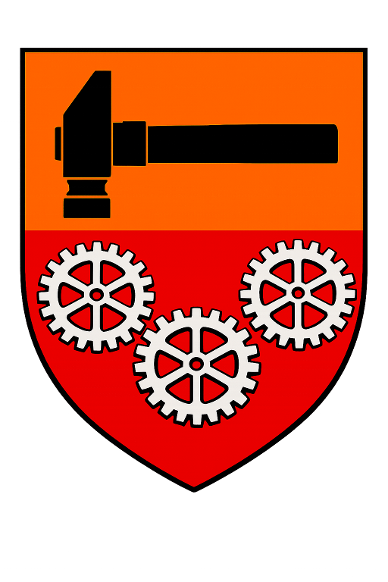
Iron March is a province of the mid-north of the Divine Empire, renowned as its foremost centre of mining, metallurgy and industry. Its identity has long been shaped by the influence of the Hovarden Dwarves of the Shield Wall, whose arrival during the age of the Higher Races transformed the region from a rugged frontier into a land of forges, foundries and deep-delved mines. The Stalen Mountains, which dominate the northern reaches of Warlderia, are rich in iron ore of exceptional quality. These deposits have been exploited since the earliest days of Dwarven settlement, their yields smelted and refined into some of the finest steel known across the continent. The Hovarden Dwarves proved exacting yet fair masters, taking local Human populations under their tutelage. In exchange for loyal service, they imparted knowledge of mining, smelting, engineering and the craft of metalworking. Over generations, these Human communities adopted many Dwarven traits, stoicism, discipline and a relentless work ethic, though they were never regarded as equals by their teachers.
Less widely acknowledged, however, is the more complicated legacy of this long coexistence. Within Dwarven society, lineage is a matter of immense importance and the boundaries between Dwarf and outsider were rigidly enforced. Yet the realities of life in Iron March — shared labour, isolated settlements and the imbalance between Dwarven men and women — gave rise to forbidden relationships. From these unions came a growing population of mixed-blood descendants who found themselves rejected by Dwarven society and viewed with suspicion by many Humans. Over time they formed a distinct and often resentful subculture throughout the region. When Kaegor's Rebellion erupted, many amongst these outcasts embraced it with enthusiasm, seeing in the revolt an opportunity to overturn a system that had denied them belonging. In response, the Hovarden withdrew their support from the Human population entirely, expelling their former wards and severing ties that had endured for generations. What followed was a bitter and protracted conflict. Though the Dwarves retained control of their mighty mountain Holds, they struggled to counter the raids, sabotage and ambushes employed by their former subjects.
As the conflict continued, Marshal Garrick Stonebreaker transformed the Human war effort. Rather than attempting to storm the great Hovarden fortresses directly, Garrick concentrated upon the roads, bridges, passes, mines and supply routes which connected them. His patient campaigns steadily broke Dwarven control of the valleys and demonstrated that even the strongest mountain Hold could eventually be defeated if isolated from the lands which sustained it. As unrest spread across Warlderia and Garrick's campaigns made continued domination of the region increasingly untenable, the Hovarden ultimately chose withdrawal over attrition. They abandoned Iron March to its Human inhabitants and retreated towards their surviving mountain heartlands, driving all non-Dwarves from the territories they retained.
To this day the Hovarden Holds remain beyond the mountains, wealthy, powerful and largely closed to outsiders. Trade continues between the two peoples, but relations remain cold. From the turmoil emerged the Kombel family, themselves descended from both Dwarven and Human bloodlines. Rising from the chaos of rebellion and withdrawal, they established their authority over the region and made their seat in the industrial city of Debdric. From amongst their number is chosen the Iron Master, a ruler who swears fealty to the Divine Emperor but otherwise governs Iron March with considerable autonomy. The Hovarden have never formally recognised the legitimacy of the Kombel dynasty, while many within Iron March regard the Dwarves as former masters who abandoned the region when it was no longer convenient to rule.
The Kombels have preserved and expanded upon the teachings of the Hovarden, studying ancient Dwarven texts and refining their own methods of metallurgy, engineering and industry. Under their rule, Iron March has become one of the most productive provinces in the Divine Empire, supplying weapons, tools, machinery and skilled craftsmen to every corner of the realm. The settlements of Iron March are dominated by industry. Smoke-stained towns cluster around forges and mines, where the air is thick with soot and the clang of hammer upon anvil echoes day and night. Conditions can be harsh, but wages are high enough to attract workers from across Warlderia.
Temples dedicated to Bleredd are common throughout the industrial districts, particularly amongst miners, smiths and metalworkers. The clergy of Pelor also maintain a strong presence, labouring amongst the foundries and workshops and tending to those injured or sickened by the dangerous work upon which the province depends. Beyond the industrial centres lies a very different landscape. Villages and farming communities enjoy a considerable degree of independence, provided they continue to supply food and raw materials to the cities. Here the pace of life is slower and older traditions survive largely unchanged. The Old Faith remains influential in many rural districts, and ancient customs often carry as much weight as Imperial law.
Despite its turbulent history, Iron March is one of the most diverse provinces in the Divine Empire. Peoples of many races live and work side by side, drawn by the opportunities offered by its mines, workshops and rapidly growing industrial towns. Half-Elves, Halflings, Gnomes and other peoples are common, while the province has become particularly renowned as a haven for Half-Dwarves from across Warlderia. Many travel to Iron March seeking a place where their ancestry is not regarded as a mark of shame but as part of the province's identity. The legacy of centuries of Human and Dwarven coexistence remains particularly strong amongst these communities. Dwarven names, customs and craft traditions survive alongside Human ones, and families of mixed ancestry have risen to positions of considerable wealth and influence. The ruling Kombel family itself stands as the most prominent example of this heritage. Iron March therefore possesses an identity unlike anywhere else in the Empire. Its people may disagree fiercely over their history, particularly over the legacy of Hovarden rule, but few deny that both Human and Dwarven traditions helped forge the province that exists today.
The Iron Masters maintain a firm grip upon this diverse and industrious society. While personal freedoms are generally respected, threats to order and productivity are not tolerated. Labour disputes, political agitators, criminal organisations and those who seek to stir serious unrest often find themselves under close scrutiny. Officially, all investigations are conducted according to Imperial law. Unofficially, there are persistent rumours that individuals who push too far occasionally disappear into the depths beneath Debdric, never to be seen again. Whether these stories are true, exaggerated or deliberately encouraged by the Iron Masters themselves is difficult to determine.
For all the severity of its rulers, Iron March remains a place of considerable opportunity. Skill and hard work are valued highly, and a talented smith, engineer, miner or merchant can rise far regardless of humble origins. The province attracts ambitious people from across Warlderia, drawn by high wages, plentiful work and the possibility of making a life amongst communities accustomed to outsiders. Iron March is thus a land of stark contrasts: grim industrial cities set against tranquil countryside, ancient traditions alongside relentless innovation, and a population forged from peoples who were once bitter enemies. Under the steady, if unyielding, rule of the Iron Masters, it remains one of the most vital and distinctive provinces of the Divine Empire.
“For those not familiar with the city of Debdric, it is built by one of the earthen races, so rather than go up in storeys like the humans do, it goes down with subterranean levels. The surface streets are really there for foreign trade and necessity, the heart of the city lies in the level beneath, the Undercity, it is here that that the city thrives and bustles. Yet beneath that layer, there is a darker place, whispered about and generally avoided by normal folk, The Shadow Halls.”
Argentilis, Elven Duskblade on the Capital of Iron March