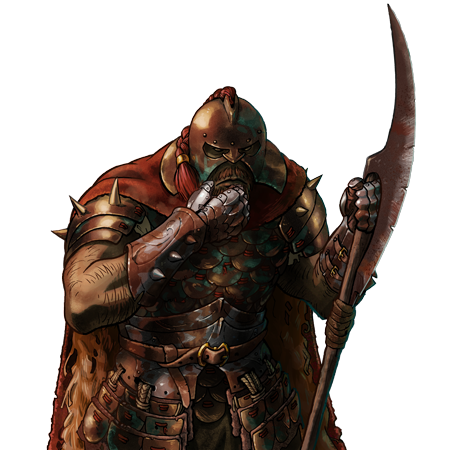
The lands between Brennenstadt, Sanziberg and the eastern coast are amongst the harshest regions of Warlderia. Countless earthquakes, ancient magical catastrophes and centuries of erosion have left the landscape shattered into a maze of immense canyons, deep ravines and broken plateaus. Travelling across the region is slow and dangerous, for roads are few and many simply disappear into the fractured earth. To the Orcs, however, these natural fortresses are a blessing.
Over thousands of years they have carved vast cities into the towering canyon walls, excavating countless halls, tunnels and terraces that descend deep into the darkness below. For most of the year the canyon floors receive little more than an hour or two of direct sunlight each day, creating an environment perfectly suited to the light-sensitive Orcs. From above, little betrays the immense settlements concealed beneath the surface, making them some of the most defensible cities in all of Warlderia.
Long before the rise of the Human kingdoms, this region formed the heart of the mighty Kingdom of Gar'anash, the greatest Orc realm ever established upon the continent. At its height the kingdom stretched from the southern Dwarven mountains to the forests surrounding Brennenstadt, from the eastern seas to the lands around Necropolis and Eisenburg in the west. Its wealth was founded upon conquest, mining, slave labour and relentless warfare. Vast herds of captive Humans and other races were driven across the plains by Half-Orc overseers, providing labour for the mines, food for the tribes and countless slaves for the markets of the great canyon cities.
The decline of Gar'anash began during the Higher Wars, when repeated invasions and devastating battles shattered the strength of the Orc armies. Although the kingdom survived those terrible conflicts, it emerged gravely weakened. The final blow came with the campaigns of Kaegor, whose armies encouraged widespread revolts amongst the kingdom's subject peoples. Province after province broke away, trade collapsed, and the authority of the Orc Kings crumbled. Within a generation the once-mighty kingdom had fractured into dozens of competing tribal domains. Today Gar'anash exists only in memory.
The surviving cities have slowly recovered from the devastation, yet none possesses either the strength or the legitimacy to restore the ancient kingdom. Instead, power rests with rival Warlords and tribal chieftains whose ambitions rarely extend beyond expanding their own influence at the expense of their neighbours. Alliances are temporary, blood feuds are ancient, and warfare between the tribes is accepted as an inevitable part of Orc society.
Beyond the great canyon cities lie hundreds of lesser rifts and isolated settlements occupied by weaker clans. These communities contain far greater numbers of Half-Orcs than the old noble tribes and often survive through trade with neighbouring Human states such as Brennenstadt and Sanziberg. They supply livestock, slaves, ores and mercenaries in exchange for manufactured goods that the canyon cities cannot easily produce. Many also maintain close alliances with Gnolls, Ogres and other humanoid peoples, allowing them to compensate for their smaller populations.
Despite their divisions, all Orcs still speak with pride of Gar'anash. Every great tribe claims descent from the warriors who forged the ancient kingdom, and each believes that one day a leader strong enough will arise to reunite the fractured clans beneath a single banner. Whether such a ruler would restore the glory of Gar'anash or plunge north-eastern Warlderia into another age of conquest remains a question that troubles every neighbouring kingdom.